
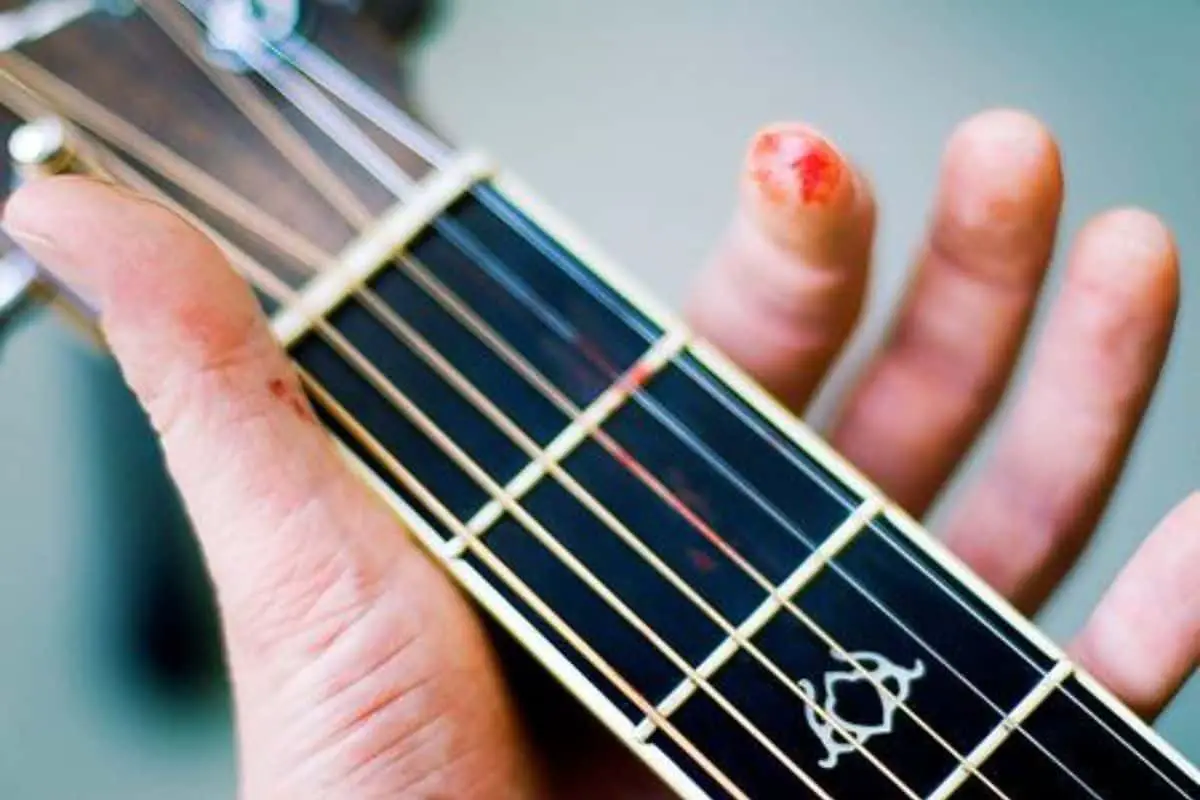
Are you a beginner guitarist learning to play the guitar, but you frequently get fingers bleeding from playing? By the time you’re done reading this article, you’ll know all about why this happens and how to stop it.
Fingers bleeding from guitar is actually very common among beginners. This happens because you have to apply pressure to play, and it can injure your fingertips. However, there are certain ways you can deal with this situation.
In this article, you’ll get to know all about fingers bleeding from guitar, why this happens, how you can deal with it, and a lot more. Continue reading to get all the answers you’re looking for.
Bleeding fingers are a big challenge for beginner guitarists
Learning how to play the guitar can be quite tricky and challenging for newbies. It’ll require a great deal of patience and a lot of practice. Only with a lot of practice can you perfect the basics and move on to more complex notes. However, there is a particular drawback that comes with the beginning stages of learning to play the guitar. This issue is that of fingers bleeding from guitar when learning.
If you have soft hands, you’re more likely to have this issue and the pain might be unbearable at times. The pain could be so high that it leaves you contemplating whether or not you should continue learning the guitar. If that’s the situation you’ve found yourself in, the first piece of advice to consider is to not give up. The second recommendation would be to find ways to soothe your fingers. By knowing why your fingers are bleeding, you’ll be able to figure out the remedies. Moreover, you’ll also be able to find ways to deal with the pain. This way, you’ll be better prepared to kickstart your guitar journey and be an expert guitarist down the line.
RECOMMENDED: The Best Guitar Learning Lessons – Review
Why are your fingers bleeding from the guitar?
There are multiple reasons why your fingers bleed when you’re playing the guitar, especially as a beginner. Some of the most common reasons include –
The presence of friction
Doing repeated isotonic movements of your fingers and hands when playing the guitar will create friction. This will cause strain on the tendons of your fingers. This also happens as the guitar strings are made using metal, which is incredibly thin and hard. Constantly pressing the strings can easily result in the top layer of your fingertips experiencing wear and tear. As the dermal layer gets exposed, your fingers will start bleeding.
Repeated contact causes blunt trauma to your fingertips
According to a study in 2011, when you start playing a string instrument, the soft tissues on the fingertips experience repeated blunt trauma. The trauma happens because of constant, repeated contact with the harsh material of the strings. Over time, the repeated pressing will wear away the top layer of your skin. This will expose the sensitive, nerve-dense dermal layer beneath.
If you try to keep playing with exposed fingertips, it’s painful enough. If you keep on playing without giving your skin enough time to grow, you can end up doing permanent damage. There can be major damage done to the skin, nerves, and blood vessels. In the worst-case scenario, you could lose sensation in your fingertips permanently.
If you give your injuries enough time to heal, there will turn into calluses. This will help you continue playing without any pain. In fact, it’s traditionally considered to be a rite of passage for beginner guitarists.
Not giving yourself enough breaks when playing
By not taking regular breaks when playing guitar, the problem can easily escalate. Not giving time for your skin to recover and heal before playing again can end up causing permanent damage. This can also get in the way of helping you form calluses too.
Not letting your skin heal
Everyone’s body reacts very differently to wounds and injuries. They recover and heal at a different pace. For some people, bleeding fingers might heal completely within 3 days, while for others it might take over a week. You should listen to your body and give it ample time so that it heals before you begin playing again. In case the problem persists, consult a dermatologist or a health consultant on potential solutions. You should inquire about what course of action would give you a quick recovery.
How long does it normally take for calluses to form?
Developing calluses comes in handy as it relieves the initial pain when learning how to play the guitar. On average, it might take anywhere between a few days to almost four weeks for the calluses to fully form. The callus formation will differ from one person to the other depending on –
- How often do you play the guitar?
- What genre of music you’re playing (folk, rock, metal)?
- What type of guitar you’re playing (electric, acoustic, fretless, bass)?
- What guitar technique you’re using (simple vs. complex chords, strumming vs. fingerpicking)?
- How tough is the skin of your fingertips before you began playing the guitar?
- What type of strings you’re using (steel vs. nylon)?
You should remember that your skin can heal faster if you aren’t regularly playing guitar. If you irregularly play the guitar and interfere with the healing, the callus formation process will need to start again.
How can you treat sore fingers after long guitar learning sessions?
There are certain home remedies that you can use to treat finger pain before and after your training session.
- Take a mild pain medication like ibuprofen for muscle and joint pain
- Apply a cold compress for relieving any pain or swelling
- Soak your injured fingertips in apple cider vinegar between two sessions as it’ll promote healing
- Apply a numbing ointment as it’ll ease the discomfort between two guitar training sessions
- Regularly stay in touch with your healthcare provider and keep the pain levels in control
How to toughen up your fingers and protect them against bleeding
One of the biggest complications of learning to play the guitar is fingers bleeding when practicing. Your fingertips being sensitive to friction and tear when playing the guitar is normal. You shouldn’t worry though as this is temporary, and it’ll go away once calluses are developed on your fingers. Here are some tips to toughen up your fingers and develop calluses so that you can keep finger bleeding away.
1. Increase the playability of your guitar
The higher the action, the more force will be needed for pressing the strings. Luckily, almost any guitar’s action can be easily adjusted. You should take your guitar to your local music store and then ask them to check the action. If it is too high, you’d be amazed at how easier it is to play once you’ve got it adjusted.
2. Never play with wet fingers
Calluses soften up after they’re immersed in water when doing things like bathing, washing dishes, swimming, or applying hand lotion. If your hands get wrinkled and your fingertips are soft after being in the water, you should wait until your hands are dry. Your calluses will feel hard again before you play.
3. Trim your nails
It’ll be considerably easier to build calluses if you have shorter nails. Long nails will not only make it hard to develop the calluses, but they’ll make it tough to get a decent sound.

4. Use the right guitar strings
Guitar strings come in a variety of types of gauges. Light gauge strings will be easier to play as compared to medium or heavy gauge strings. Moreover, they’ll also cause far less finger soreness. Medium or heavy gauge strings might hurt initially, but they’ll give you nice and thick calluses quickly.
5. Avoid pressing the strings too hard
Beginner guitarists often have a tendency to press down on the strings extremely hard. Relax your fingers and then press down hard enough to ensure that the string is firmly contacting the fret. The biggest danger of using too much pressure would be developing tendonitis. It’ll force you to stop playing the guitar altogether until you’ve completely recovered.
6. Refrain from picking, biting, or shaving your calluses
If you pick, bite, or shave your calluses, you’ll be back to where you started. You’ll then have to do this process all over again. You’d be surprised at how tempting it can be to gnaw these calluses off, especially when they’re wet and soft.
7. Soak your fingertips in apple cider vinegar
You’ll need to soak your fingers in apple cider vinegar for 30-60 seconds before and after playing the guitar. Lightly ice your fingertips before and after you play, as it can help alleviate soreness. Topical anesthetic products having benzocaine, toothache creams, and more can be applied before and after playing.
Some guitarists will use a spot of Super Glue or tender tips as makeshift calluses. You need to be careful that your fingers aren’t sticking to the fretboard which could damage the finish. If you end up developing a split in your finger, you should use a liquid bandage to help close it.
8. Make use of rubbing alcohol
A tip that comes straight from the legendary Eric Clapton, you should rub your fingers with isopropyl or rubbing alcohol. Do this 3-4 times a day for a week for beginners or someone who has not played for a while. This will dry out your skin while helping the calluses build quicker.
You should wipe your fingertips using a cotton pad soaked in rubbing alcohol. You can also use alcohol wipes, something used by health care providers for cleaning your skin before giving the injection.
9. Learn to play a steel-string acoustic guitar
If you’re learning to play a steel-string acoustic guitar, it’ll be comparatively easier to play the electric guitar. Electric guitars are usually the easiest ones to play. The strings are thin and the action is low, making them far easier to press down.
READ MORE: Guitar Tricks Review – How to Play Guitar Like a Pro

10. Make use of pocket gadgets
Some guitarists prefer keeping an old credit card in their pocket to harden and maintain calluses. They do it for passing time when waiting in a bank line or riding a bus. Holding the credit card across the palm of your hand and then press each finger into the opposite edge. A few people dig their thumbnails into their fingertips right where the string hits the tip.
11. Persevere
Every beginner who takes up the guitar must deal with the issue of sore fingers and bleeding at the start. Each time they need to take a break to heal and then return to using the instrument. In the end, learning the guitar is well worth the pain. You should keep pressing on and continue playing regularly. You should embrace the pain, as it’s temporary and it’ll eventually pass. Never let sore fingertips stand between you and your dreams.
Finally, remember that you have worked incredibly hard to get the calluses. Keep the calluses the same way that you earned them – keep on practicing and then do some more practice. Your fingertips will serve you for a lifetime.
Conclusion
Thank you for reading. Hopefully, now you know a lot more about fingers bleeding from guitar, why does it happen, how to deal with this problem, and how to toughen up your calluses. Fingers bleeding when learning the guitar is something that happens, especially if you’re a beginner. Whether you’re passionate about learning the guitar or only want to learn it enough to play a couple of songs, you wouldn’t want the pain to hold you back. It’ll be important to take care of your fingers inside and outside. You should be kind to your fingertips and protect them by building your calluses gradually. Do whatever possible to limit the stress and pressure on your tendons and finger joints.
Image Credit:
Featured Image: SoundCloud