

Many lefties will refuse to take left-handed guitar lessons because they feel it’s “too difficult” to be worth it. However, there’s little to no difference in how a left-handed guitarist can progress compared to a right-handed guitarist.
Being left-handed in guitar means that you feel naturally more inclined to strum with your left hand and fret with your right hand. What about reading music for the guitar? Well, reading tabs comes naturally, since tabs are written respecting the “E up, e down” convention, which is the way guitar strings are, no matter your laterality. Chords, however…
I get it. Chords can be confusing and difficult to understand when you’re starting to play, and it’s because of how they are written in the standard charts. Chord charts will usually have the strings displayed like this:
Lower pitch [E A D G B e] Higher pitch
However, when a leftie looks at its guitar, headstock facing up, they will have the following sight:
Higher pitch [e B G D A E] Lower pitch
This can be confusing for some because getting your head around the inverted order can be tricky if you’re inexperienced. For some, imagining they’re looking at a mirror while trying to learn a chord will do the trick. But from my experience, most left-handed guitarists will benefit greatly from seeing or taking note of chords in a way that makes sense for them. Therefore, in this article, you will find both versions of the chords (left-handed and right-handed) with indications for both fingers and fret positioning. The chords displayed here will give you a great boost in your learning, and soon you’ll notice how you will be able to come up with the rest naturally.
Let’s get started!
Left-Handed Guitar Chords
For the positions in the fretboard, we will use numbers, starting from 0, which is the open string, and counting up as we move away from the headstock. An O on the headstock is an indication to play the open string to execute the chord.
For the fingers, we will use numbers, counting the index finger as 1 and moving up from there. You will see in other chord charts that these numbers are replaced with initials of the fingers: i for the index finger, m for the middle finger, r for the ring finger, and p for the pinky.
C major (C)
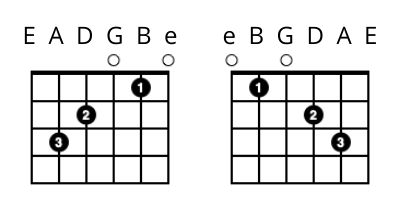
D minor (Dm)
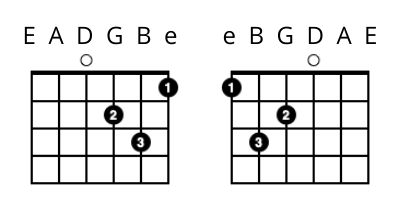
D major (D)
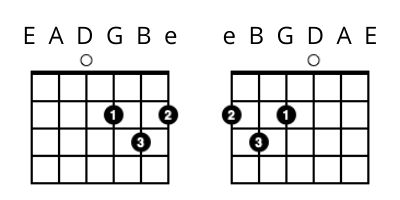
E minor (Em)
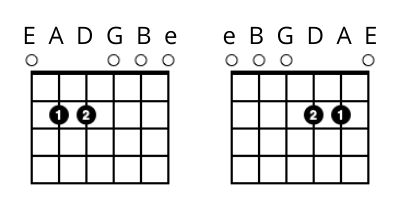
E major (E)
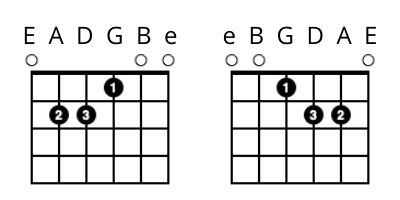
G major (G)
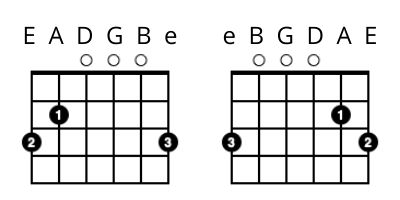
A major (A)
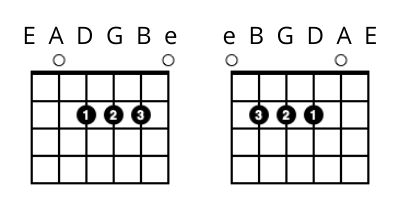
A minor (Am)
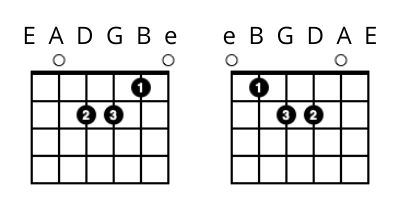
Left-Handed Guitar 7th Chords
Now, let’s see how to perform some open chords with added seventh, which are very common in pop and rock.
C with an added seventh (C7)
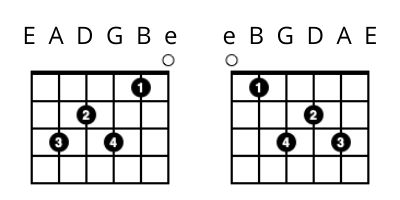
D with an added seventh (D7)
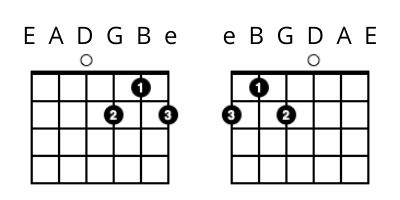
E with an added seventh (E7)
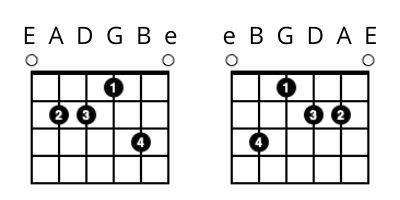
A with an added seventh (A7)
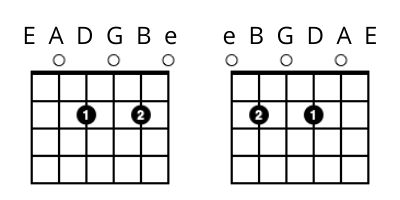
B with an added seventh (B7)
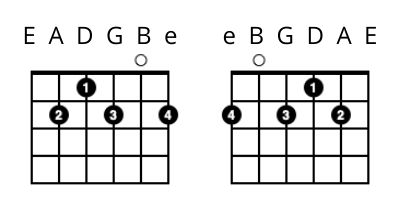
Except for B7, you can play the minor version of these chords with little issue.
Left-Handed Guitar Barre Chords
Now, let’s check out some barre chords. For these, you will need to use your index finger as a bar that goes across all the strings in a certain fret. In some of these, if you’re a beginner, it’s okay to use both index and middle fingers to press hard enough, so you don’t leave any dead notes.
B major (B)
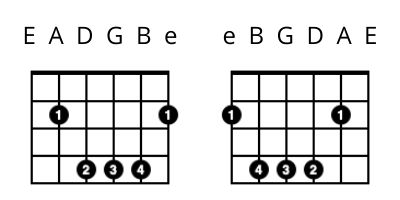
B minor (Bm)
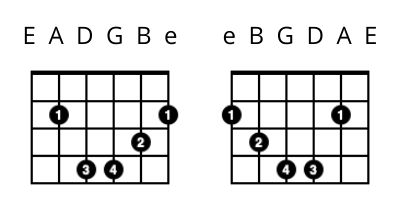
C minor (Cm)
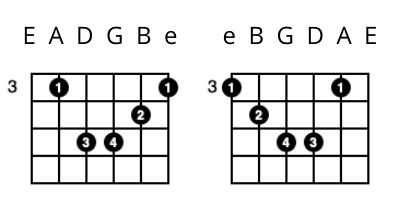
F major (F)
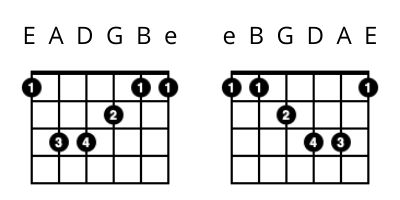
F minor (Fm)
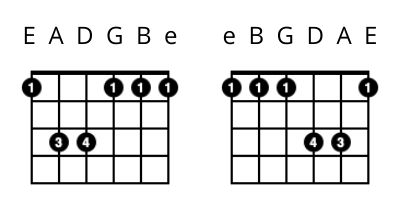
G minor (Gm)
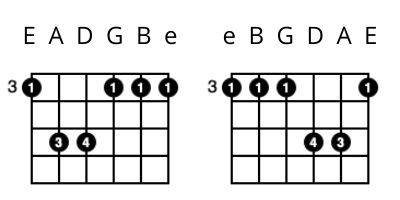
Can you notice how some shapes with your hand seem to repeat? That’s because barre chords take open chords down the fretboard. This way, if you learn open chords and their “shapes”, you will be able to play any chord you want! More on this subject in the article about how to learn chords and scales easily.