
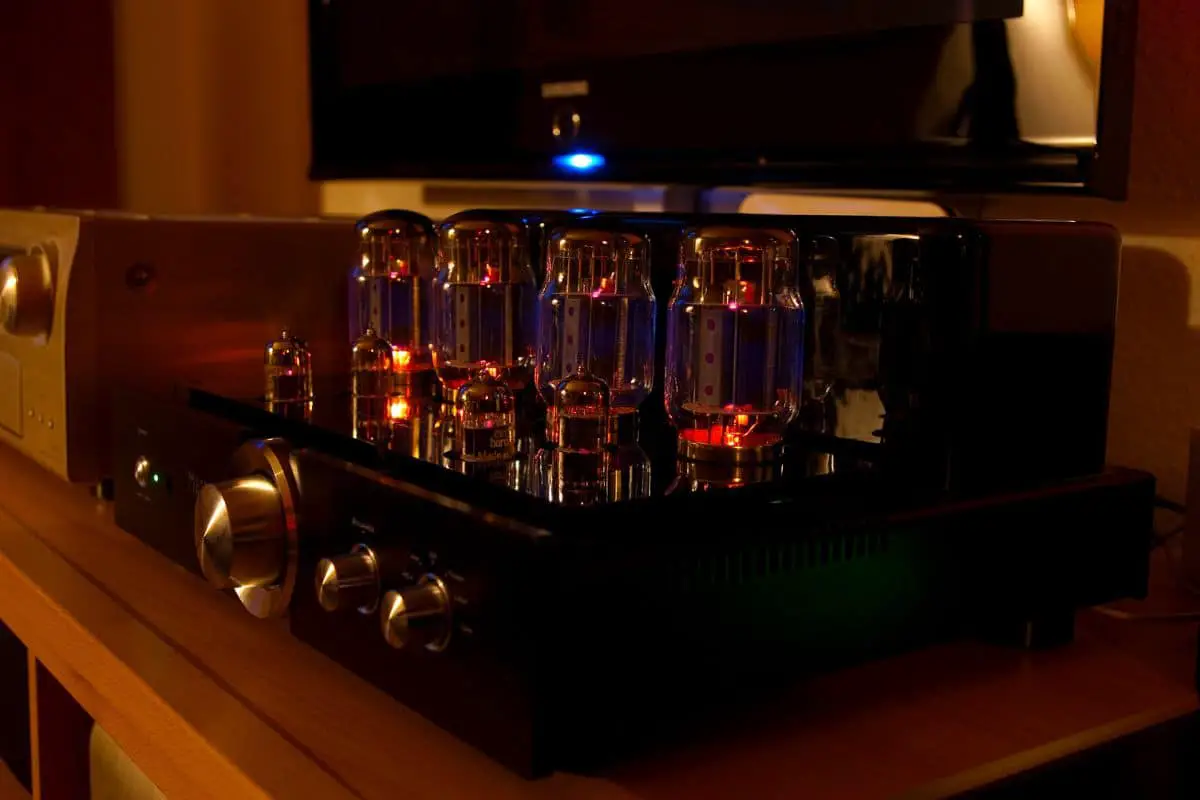
Have you bought a costly guitar amp and planned on taking good care of it and making it last for years to come? If so, then you’re definitely in the right place.
Caring for your tube amp will be pivotal in ensuring that it delivers amazing results and lasts for years to come. There are many steps that you can take to take care of your tube amp such as keeping it in a stable environment, warming it up before playing, using high-quality cables, and more.
In this article, you’ll get to know all about how to care for a tube amp, measures to avoid for better performances, habits that you can inculcate to extend the tube life of your tube amps, and more. Stick around to get all the answers that you’re looking for.
Maintain your tube amp for a better performance
All practical audio amplifiers need some sort of amplifying, whether in the form of old-school vacuum tubes or new-school transistors. Transistor amps are extremely efficient, durable, and rather inexpensive.
Tube amps like power, and they can consume more than you may think. Tube amps eat up power like someone having a third round at the “all-you-can-eat buffet” while they’re comparatively fragile compared to their solid-state counterparts. Moreover, one shouldn’t forget the heat generated by tube amps. Your studio shouldn’t be getting that sort of extreme heat at night when you’re honing your craft.
There are many myths and misconceptions about tube amps. Most of them are bad and negatively affect the way you care for and maintain your costly investment. Some advice could end up damaging the amp. However, it’s important to bust those myths and tell you the right ways how to care for a tube amp.
>>> Click here to read our review about the Top 15 Best Tube Amps <<<
Bust myths on what to do and what not to do with your tube amp
A vacuum tube or often called a “valve” modulates the power from the power supply. It’ll match the input signal to output a stronger/amplified signal. For doing that, it’ll need a filament (like an incandescent bulb) for motivating the action and control it between the cathode and the plate. Without proper operation between the cathode and the grid, the tube could run wide open. It’ll simply burn up or run cold by allowing not enough to go through.
Pre-amp tubes, usually the triode types like 12AX7s or the rare 12AT7s, don’t have to be re-biased in the amp when they’re changed. When changing them, you can just plug in the new tube, and you’ll be good to go.
For power amp tubes like EL84, EL34, 6V6, and 6L6 to operate correctly, they must be based properly. They’re usually in a push-pull AB amp topology. For correctly operating the grid, it should shut off when the signal has switched to the other tube of the circuit. This is what “push-pull” refers to. They’re usually in even quantities, as one-half will be sharing the work with the other half. There will be an optimum bias DC voltage that has to be applied to function correctly for reducing distortion and optimizing power output.
Ensure that the tubes are properly biased. The tubes that are biased too high and hot, they’ll die prematurely. Having too low and cold biased means the sound will sound cold and lifeless. When you’re working with a new rig, the amp will already be biased. When using an older amp having non-specified replacement tubes, you should take your amp to a technician. Have the amp re-biased with new tubes.
Tube amps are very fragile components, but there are certain maintenance myths attached to them. The warm tone, look, and feel that the guitarists get are amazing. Taking care of them will be a serious task and should not be taken for granted. Here, you’ll get to know about some of the things that you shouldn’t do to your tube amp.
- Playing with no speaker connected
- Not playing the amp for long periods of time
- Moving or hitting when the tubes are still hot
- Leaving it on standby for long hours
- Turning it on and off frequently
- Humidity or letting it get wet
- Installing the wrong type of tubes
- Using it heads down
- Plugging it into the wrong voltage
- Blocking the airflow into it or not allowing the heat to dissipate
How to care for a tube amp?
Tube amps will need a great deal of care and maintenance to keep them functioning as intended for longer durations. Any true guitarist will commit to a regular cleaning and maintenance schedule to ensure better performance. Moreover, if you know how to take care of a tube amp, you can enjoy your tube amp for years.
A tube amp isn’t something that you can leave in the corner in between consecutive uses. It’ll end up accommodating dust, and this will negatively affect the guitar’s performance and durability. To ensure that your amp is ready to function at all times, you will have to do a couple of things. Use it regularly and stay on top of basic care and maintenance.
Here, you’ll get to know how to care for a tube amp to keep the amp in perfect condition. While it might seem like a lot of time and effort goes into maintaining your tube amp, it will be totally worth it. Not only will you be able to get pristine sound, but it’ll work well for years to come.
1. Keep your guitar amp in a stable environment
Do you often find yourself moving your tube amp quite frequently? Do you keep your amp in an area that gets subjected to drastic changes in temperature? If so, then your tube amp might be prone to suffering.
It’ll be best to keep your fragile amp in a stable environment where it wouldn’t be exposed to humidity or significant changes in temperature. When your tube amp has to be transported frequently, ensure that you’re giving your amp enough time to adjust.
Without the ability to adjust to the new environment, your amp will likely suffer from premature failure of components. This will be due to differential expansion that gets induced by the changes in temperature and other external factors. You might need to think twice about keeping the amp in a poorly insulated spare room where the heater only gets turned up when you come in.
2. Allow it to warm up
Talking about sensitivity to temperatures, it’ll be important that you give your amp enough time to warm up. It’s important to warm up your tube amp before you start using it. You will first have to turn on standby mode and allow your amp to warm up. Moreover, put your amp in standby mode before you flick the main power switch.
After a brief warm-up period, flick it to OFF while allowing the tubes to warm up for a minute. Then, you can start putting the tube amp to good use. Simply toggle on the power and trying to put sound through it would shorten the amp’s life. You should take that extra step to warm up your tube amp properly, as it’ll greatly extend its working life.
3. Never use it as a coaster
Maybe you can’t imagine using your precious tube amp as a coaster and putting drinks on, but many people do. The fact is that accidents can happen at any time. If you are using your tube amp as a coaster, you are simply asking for trouble. If something spills on your amp, the disaster cannot only ruin the amp, but if the amp is plugged in, it may take you down as well. This may seem like a no-brainer, but it is a point worth mentioning.
You should keep liquids of all kinds away from your tube amp. Get a table and then put it out of arm’s reach. It should be kept away from the tube amp for ensuring that there’s no way you can possibly get any liquid from its rightful place onto your amp in any situation. Electricity and liquids are a dangerous combination. Even if your tube amp is unplugged, a spill could lead to quite a serious accident.
4. Use high-quality cables
Have you noticed your amp popping and crackling like a bowl of cereal? You can ensure that your cables are in working condition and that you’re using high-quality cables. You must also check your guitar amp’s connections regularly and keep them nice and clean. An accidental short can greatly reduce the working life of your guitar amp. You should go through the connections (both inside and outside the amp) once every few months. This will allow you to keep everything sparkling clean. If the cable looks like it’s getting old, you can simply replace it.
5. Remember to plug things before powering on
It is highly likely that someone might have told you before that you shouldn’t turn your amp’s head without it plugged into a speaker cabinet. Generally, you should never turn on your amp without having all the things plugged in and ready to go.
Failing to plug into your speaker cabinet before powering on the amp can and likely will result in changes. However, plugging in other connections after powering on will present a bit of impedance. This can end up damaging your amp as well, even if it’s on a smaller scale. You should try and get into the habit to plug everything together before things are running.
6. Choose the right amount of load
Loading and impedance are two essential aspects of your guitar amp’s proper functioning. You should ensure that your cabinet matches perfectly your amp’s impedance and that you’ve plugged things into the correct sockets. Miss-matching the loads could be incredibly hard on your amp.
7. Keep everything still
Your cabinet may have casters on the bottom, but this isn’t an excuse to push your amp while it’s on. You must try and keep everything still and stable while things are still running. The filaments and other parts inside a tube are weaker when they’re hot. If you need to move your amp, you should do it before you power it on and after it has had the chance to cool off.
You should allow your tube amp to cool off before you load it out. When the amp tubes are cold, you’ll be less likely to do damage to the amp. If your tube amp experiences a shock of any sort, it could lead to immediate failure. If you’ve bumped your amp or dropped it and things have gone quiet, it’ll be time to take the amp to the repair shop.
8. Turn the amp right off
There isn’t any reason to go into standby mode when turning your amp off, just shut down the main power. After it has cooled down, flip the standby switch into the ON position, and it’ll be ready for the warm-up process the next time you’re using it.
9. You shouldn’t let it sit around
Tube amps are highly finicky and if you leave them sitting around without being used, it’s not a good look. Sooner rather than later, you’ll be bound to run into a problem the next time you try to use it. It’ll be ideal if you use your tube amp quite regularly.
If you are putting your tube amp into storage, you should ensure that you get a can of electronic cleaner to blow off any dust and debris. This should be done both inside the amp and inside the jacks. Use a soft cloth for wiping down tubes, and ensure you keep things shiny and like a new amp. The dust on tubes could hold in heat, and excess heat will end up aging your amp’s components. As you dust your amp, it’ll be the right opportunity to check through the amp. It’ll allow you to ensure that the tubes are seated in their sockets firmly.
Remember, even when the amp is in storage, ensure that your amp is stored in a controlled environment. Keep the amp away from any dampness and humidity, like something found in your storage shed or garage. These things could age your amp, and they aren’t that good for your speakers either. Humidity will lead to surrounding rot, contact corrosion, and make paper cones brittle.
10. Enjoy using your amp
At the end of the day, you should remember why you’ve chosen tube amps, even though they’re fragile and time-consuming. The reason for that is the sound!
When you’re putting in all the work to keep the sound at its point, you shouldn’t forget to plug in the amp and enjoy it. Not only will this extend its life, but you’ll also get to enjoy the payoff for all the hard work.
Extend the amp’s tube life after knowing how to take care of a tube amp
Now that you know how to care for a tube amp, it’ll help to know tips to extend the tube’s life –
When bringing the amp in from outside (especially from the cold), let it reach room temperature. This will cover a lot of ground, from dealing with condensation to handling temperature-induced differential expansion. Such things can lead to premature failure of components.
Turn on the standby switch and then the main power and allow the amp to warm up. You should take the amp off the standby for a few minutes to allow the preamp and power amp tubes. Let it come to an optimum temperature before you start using it. This step by itself will go a long way in increasing the lifespan of the amp tubes.
Make use of proper load. Impedance and loading will be critical for most am tubes. Always ensure that the tubes have the correct impedance to match the cabinets being used. Miss-matched loadings and low impedance situations will be hard on tube amps.
Keep all the liquids and beverages away from your amp tubes. A spill is a disaster waiting to happen. It could not just ruin your amp, but it can also take seriously injure you.
When cold and stowed, you should blow out debris with a can of electronics blow-off. It’ll allow you to remove the cobwebs, dust, and fur from the drummer’s cat and wipe tubes using a cloth. Dust will keep in heat, and excess heat could age the components in the amp. This will be a great time to ensure that your tubes are firmly seated in the sockets.
Always make use of a quality cable that is in great working condition. If the cables are producing crackles or pops when working, you’ll need to replace them. Shorts can greatly reduce the lifespan of the amp tubes.
Take care when you’re plugging in the amp in the speaker cabinet. Do it before you fire things up. If it’s hot and on standby, plug in the cabinet first, and after that plug in the amplifier side. There will be a slight short produced when you’re plugging in and out, while the cabinet will present impedance. The same principle will work well for the signal lines. Moreover, you should plug the cables into the source or instruments first and then plug them into the amp.
You shouldn’t move the amp a lot when it is running. The filaments and parts in the tubes are physically weaker when they’re hot. Shock could end up causing immediate failure.
Allow the amp tubes to cool down before loading them out. You’ll be less likely to do much damage when the amp tubes are cold.
When shutting off, you shouldn’t go to standby. You should simply shut it off. If after cooling down, you’re putting the standby on, you won’t need to remember to turn the standby on when you’re powering up the next time.
You should never drop the amp. There are solid-state amps that light right up after getting dropped. However, the same isn’t really possible with the tube amp running on amp tubes. You should keep the bumps, shocks, and drops to a minimum even when they’re protected by a soft case.
Always make sure that you’re storing your amp tubes in a controlled environment. Long periods in damp and overly humid conditions will age your amp tubes. These conditions aren’t that good for speakers and could lead to surrounding rot and corrosion.
Conclusion
Thank you for reading. Hopefully, now you know a lot more about how to care for a tube amp, measures to avoid for a better performance, habits that you can inculcate to extend the tube life of your tube amps, and more. Maintaining and taking care of the tube amp will be key to ensuring that the amp is delivering stunning results and making them last for years to come. There are several things to know about how to take care of a tube amp. Some of them include keeping your amp in a stable environment, using high-quality cables, warming up the amp before playing, and more.