
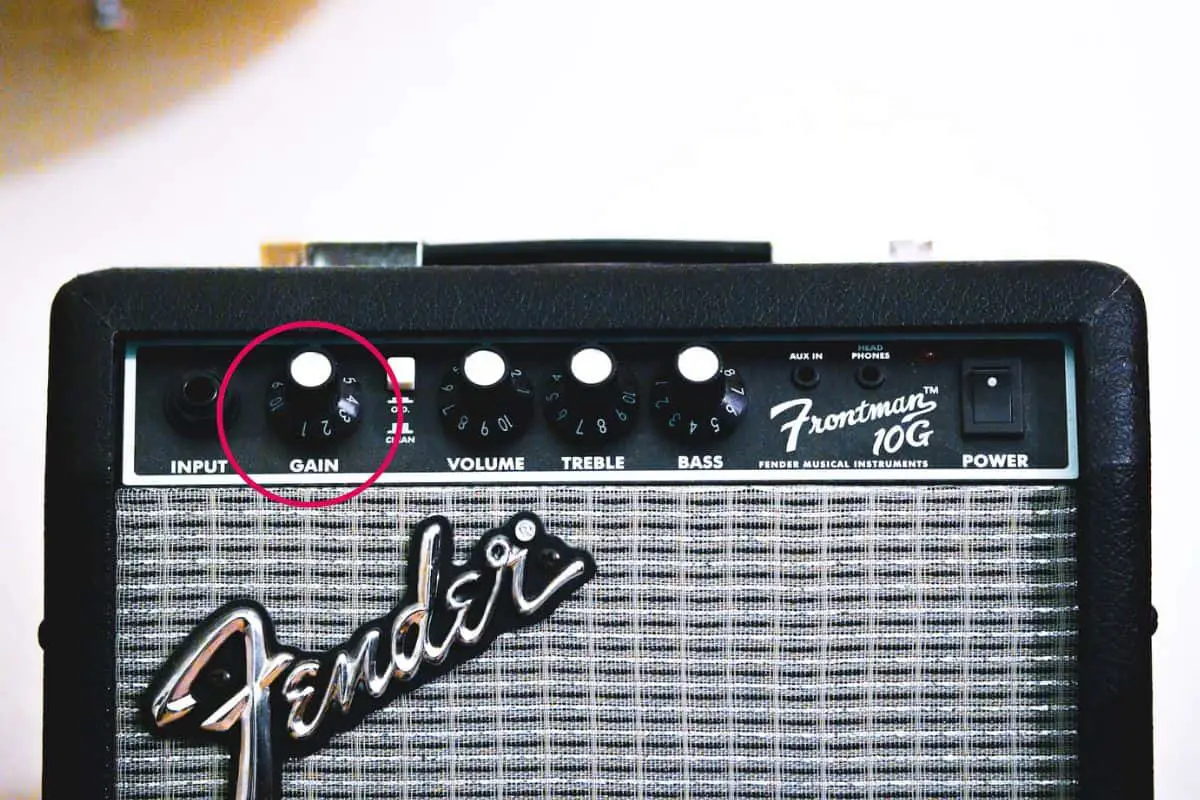
Have you been learning to play the guitar, but gain in the amp is causing you issues? If so, then you’re not alone. Many beginners have trouble understanding what is gain on a guitar amp.
Gain on a guitar amp is used for increasing the guitar’s signal strength at the beginning of the signal chain, at the input of the amp, and at the start of the preamp section.
In this article, you’ll get to know all about gain, what is gain on a guitar amp, why is gain used, what does gain do on a guitar amp, the difference between gain and volume, and a lot more. Stick around to know all the answers you’re looking for.
What is gain on a guitar amp?
The world of electric guitars has many secrets… or so everyone thought. The “secrets” aren’t secrets anymore, thanks to the wonders of the internet and the plethora of information available. However, there are a few things about guitars and guitar amps and their inner workings that confuse many guitarists. If you’re a guitarist, it’ll be a great idea to be properly informed about everything possible. This is the only way you can have total control over your guitar’s sound and tone. This is where the confusing concept of gain in guitar amps steps in.
What is gain in guitar amp is something that has been confusing not just the beginners but also intermediate and sometimes experienced guitarists. Even though everyone makes use of this control and roughly knows about its use, not many people can come up with a proper definition of gain. Moreover, not many people properly understand how it affects the guitar amp’s tone.
You’ll probably see many terms associated with it, like distortion and high-gain amps. However, it’ll be tricky to exactly point out the functions. It isn’t out of the ordinary to see musicians putting gain in the same category as volume control.
But you shouldn’t worry, gain isn’t something that is tough to understand. As this is an essential yet overlooked part of learning about the guitar, it’s important to have the answers to the question “what is gain on a guitar amp?” Gain essentially increases the guitar’s signal strength at the beginning of the signal chain, on the input of the amp, and at the start of the preamp section. Gain isn’t the same thing as distortion, but it could increase the distortion level of the tone.
What does gain do on a guitar amp?
Almost every guitar amp or distortion pedal in the market today features a gain control. While it’s commonly found on the drive channels of amps, you can see the same controls on clean channels. But to understand what does gain do on a guitar amp, you’ll first have to distance yourself from the mindset of a guitarist. You should look into regular mixers or other audio equipment that comes with gain control on it. You’ll first have to understand what volume means and how is it different from gain.
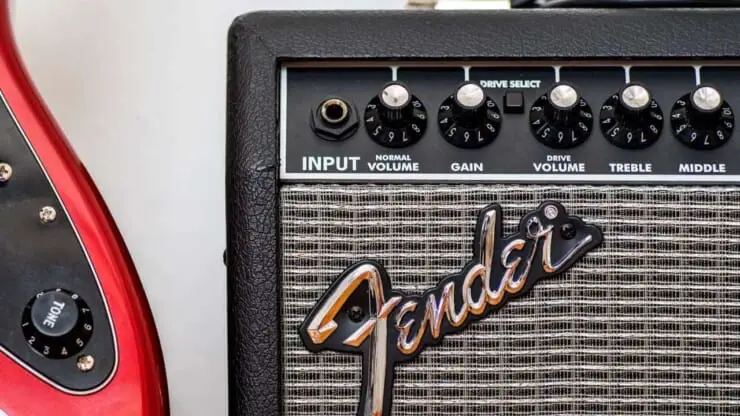
The volume control on any audio equipment will determine how loud the equipment can get. You’ll be able to express the volume in terms of decibels. Take your computer speakers or home stereo and raise the volume level, you’ll notice the audio getting louder.
However, it isn’t that simple. Volume will determine how loud the audio can get after it has been processed. It’ll be located at the end of the signal path. Even if you are using an individual mixer channel, the volume control will determine the level at its end before it gets into the final mix. The same rule will apply to guitar amps. Here, the master volume will be part of the power amp section. It is intended for increasing the volume without actually altering the sound in any way.
Now, considering a standard guitar amp, the gain will determine the strength of the signal at the input. Gain control will determine how strong the signal gets at the start of the signal chain. In the case of guitar amps, this is a part of the preamp section. By turning the gain control, you’ll be able to give more pressure on the preamp. Moreover, the gain will also have a major impact on the tone.
The gain knob will get distraction in or out of the sound. The volume only increases the overall output without actually changing the tone characteristics. Unless you’re using a tube-driven amp, which will then add more of a “warm” distortion when pushing the volume up. Even then, it won’t affect the tone almost as much as the gain control. With advancements in technology and the development of digital devices, the gain has become even more complicated. In most cases, it is intended to have the same effect as the gain control of analog devices.
What is gain staging?
Now that you know what is gain on guitar amp, you’ll want to know what is gain staging all about. Gain staging is a term that often gets thrown around a lot. It is actually an important concept as it’s important when playing the guitar. Gain staging is the process where you make the dB level of the sound consistent throughout the processing system. Basically, the level coming into the channel should be the same as the level coming out. Gain staging is essential, as human ears perceive loud sounds to be better than soft sounds.
If you’re not making the loudness level consistent from one plugin to the other, you won’t get to know if the plugin is making the instrument sound better or just louder. In other words, it’ll make your judgment way less accurate. You’ll have to do this with each plugin that you’re using. For instance, if you’re using a compressor, it’ll be important to use the makeup gain to “gain stage” (turn up the volume) for compensating for the volume lost.
If you’re using an EQ, the same practice will apply. If you cut a bunch of frequencies, the overall level was likely turned down. You’ll have to turn it back up using the volume knob. If you’ve just put on distortion, the instrument will get a lot louder. You should use the volume controls for turning the output of the distortion down for matching the level of the input. By doing this with all plugins, your mixes will dramatically improve as you’ll be making more accurate mixing decisions.
Moreover, it’s important to gain stage each recording you’re carrying out in a session. You’ll want them to be roughly on the same level before you start mixing. This is particularly important if they’re all in the digital sweet spot.
High-gain vs. low-gain amps
Now, you know about gain, but what do the terms high-gain and low-gain amps mean? High-gain amps will create distorted, heavy tones at lower volumes. Meanwhile, low-gain amps will give clean, higher-headroom amps. These terms sometimes add to the confusion when talking about gain in relation to volume and distortion.
High-gain amps
High-gain amps are designed with preamps that exceed the clean headroom limit quickly. This means that they’ll create heavily distorted sounds at comparatively lower volumes. Meanwhile, they’ll also adjust the gain control just controlling distortion as opposed to changing the volume. These amps often come with multiple channels, one dirty and one clean. This will make them a fantastic option for heavy metal players looking for versatility.
High-gain amps come in different shapes and sizes, including low-watt (quieter) and high-watt (louder) amps. Most of them come with a Master Volume control, allowing you to adjust the volume without changing the gain structure.
Low-gain amps
Low-gain amps work in the opposite way. These amps come designed in a way to have preamps where the clean headroom limit is always higher than gain. It means that you’ll be able to turn the gain up really high on these amps. Moreover, the sound will result in an increase in volume instead of a significant increase in distortion. These amps will often have a higher wattage and sometimes come without a Master Volume control.
Some amps that you may associate as “high-gain” are actually low-gain amps turned up to extreme settings. Marshall is a good example of that, and so is Fender. Both of these amps can generate clean tones at loud volumes. They also have to be cranked seriously loud for getting their iconic distorted tones.
How to use guitar amp gain?
Once you’ve understood what is gain and what it isn’t, you’ll have a better understanding of using gain on the amp. Let’s have a look at the possible amp tones you may want to have and how to achieve them with different gain settings on your amp.
Clean tones that are loud
This type of sound is what the amp builders were going after in the early 60s. This resulted in brands like Fender creating the Bassman and the Twin Reverb. The amps had enough headroom, allowing you to play loud enough to overpower drums while still staying nice and clean.
For achieving a high-headroom, loud, clean noise, you should dial in a low-gain setting. It’s recommended that you should listen for the loudest point where the amp remains clean even when you’re playing hard. This can be easily achieved by rolling down the gain. If your amp features a separate Master Volume control, you should turn this control up. Going for the right high-wattage, low-gain amp will help you achieve this tone.
Heavy, tube-driven distortion
If you want heavily distorted sounds, you should use a high-gain amp that delivers loads of gain at any volume. With these amps, you’ll be able to set the Gain to where the dynamics match the tone you’re after. Then, you can use the Master Volume in the power amp for dialing in your volume level.
If you have a non-master volume amp, you can achieve tube-saturated tones by cranking the single Volume knob past the unity gain and beyond. In these amps, the only way of controlling the gain will be with the volume control.
Edge of breakup
The edge of breakup sound will lie in the sweet spot where the tone is neither dirty nor clean. This will be the ideal tone for many guitarists. For such a sound, you should set the gain to a point where picking lightly will create clean notes. Meanwhile, you will also be digging into the strings to create a small amount of distortion or compression. This will create what is known as “touch sensitivity”. Getting this tone on non-master volume amps might require you to crank up slightly. However, you should know that it’ll be worth it. Turn the gain control past noon for starters and then experiment with your amp from there.
Are Gain and Volume the same thing?
Similar to distortion, Gain causes volume, but they’re not actually the same thing. Increasing the gain on the amp increases the volume until you’ve hit the clean headroom limit. This is the case as gain occurs in the preamp section of the amp. The preamp is where the EQ and gain are determined in the amp. This will differ from the preamp section where volume is determined and created. If you’re looking to increase the volume without changing the tonal characteristic of the amp, it’ll be best to do this using the amp’s Master Volume Control. This will control the volume commonly found in the power amp sections.
Often, beginners and even intermediate guitarists lump gain and volume into the same definition. However, this is actually a very lazy yet common misconception. While both of them can incur volume, gain cannot actually be defined the same way that you’d define volume. Both of them serve very different purposes. Rudolf F. Graf has given the definitions of gain and volume in the Modern Dictionary of Electronics.
Gain is defined as an increase in power when the signal is transmitted from one point to the other. It is generally expressed in decibels. Moreover, it is the increase in the strength of the electric signals being transmitted in an amp. Meanwhile, volume can be used for signifying either the intensity of the sound or the magnitude of audio frequency waves.
This is why you often get both a Master Volume and a Gain knob on guitar amps. The key to understanding the difference between volume and gain is found in understanding the functionality of the knobs.
Understand the gain knob
For understanding what a gain knob does, you’ll need to first understand the basic two-part structure of an amp. You would have noticed that most guitar amps have a standalone gain knob. In some Marshall amps, there are two channels and normally, you will have one gain knob per channel. When the guitar’s signal gets to the guitar amp, there are two stages that it must go through. Those two stages are – the preamp stage and the power amp stage. It is only after these two stages that it outputs through the speaker.
What most people overlook is that the gain knob only functions during the preamp stage. Gain will be the volume control that amplifies the signal that is going into the preamp. Hence, you will find that the gain knob on the amps is labeled “PREAMP” on the channels. The preamp stage of the amp and gain will go hand in hand. A preamp will be needed to amplify a signal if the source level is too low. It needs to be pre-amplified to be usable for further processing, control, and other uses.
Hence, the preamp is where the signal will be prepped and shaped for the final output. This is also where all the EQ measures are applied. Bass, treble, and mid are all functions that’ll be adjusted and implemented in the preamp stage. In simple words, the amplification of your guitar’s signal will take place in the preamp.
Understanding the volume knob
After the preamp, the guitar’s signal will get moved to the power amp. Then, it’ll be output through the amp’s speaker or the external speaker cabinet. At this stage, the knob labeled Master Volume or Volume will control how loud the output is. You should turn the gain up at the preamp stage and either keep the master volume the same or lower it at the power amp stage, this is how you’ll get the distorted signal.
Gain will be applied at the preamp stage. Meanwhile, volume will be applied at the power amp stage. In most cases, the power amp and preamp will be the same unit. This is evident in most amp heads or guitar combo amps. Additional preamps can be added through pedals or rack effects units. You’ll see the Master label near the volume knob. It indicates that it’s controlling the master volume of the power amp once the preamp has done its part. The higher the gain, the more you will be overloading the preamp, creating the distortion or fuzz that you’ll hear. This is why gain knobs are sometimes referred to as – drive, distortion, or channel volume.
Conclusion
Thank you for reading. Hopefully, now you know a lot more about gain, what is gain on a guitar amp, why is gain used, what does gain do on a guitar amp, the difference between gain and volume, and a lot more. The gain on a guitar amp is often a confusing topic, as beginners confuse it with volume and distortion. Gain is actually used for increasing the guitar’s signal strength at the beginning of the signal chain, at the input of the amp, and at the start of the preamp section.